Dump Bodies Engineered for Northeast Conditions
DownEaster dump bodies and hooklift systems in North Hampton for contractors hauling bulk materials and municipal crews managing seasonal workloads
DownEaster manufactures dump bodies and Swap-Hogg hooklift systems in Maine, where the design priorities reflect decades of building equipment for road crews clearing snow, landscapers moving loam and gravel, and contractors demolishing structures in tight New England job sites with overhead wires and narrow access roads. Boyer's Truck Equipment installs DownEaster products built from heavy-gauge steel with accessible hydraulic components that can be serviced without removing the entire body or hoist assembly. These systems are used by paving crews hauling asphalt in the summer and switching to sander bodies in the winter, by tree services loading logs and brush, and by towns that need one truck chassis to perform multiple functions depending on the season.
The difference between a standard dump body and a hooklift system is versatility—Swap-Hogg hooklifts allow the truck to pick up and drop off different containers in minutes, so a single chassis can haul a flatbed for equipment transport, swap to a dump body for hauling stone, and then switch to a enclosed container for secure storage, all without permanent mounting hardware. The hoist arms are controlled from the cab, and the locking system engages automatically once the container is seated on the frame rails.
Request a detailed estimate based on the type of loads you haul and whether a fixed dump body or a hooklift system better fits your operation.
What Simple Steel Construction Means for Field Repairs
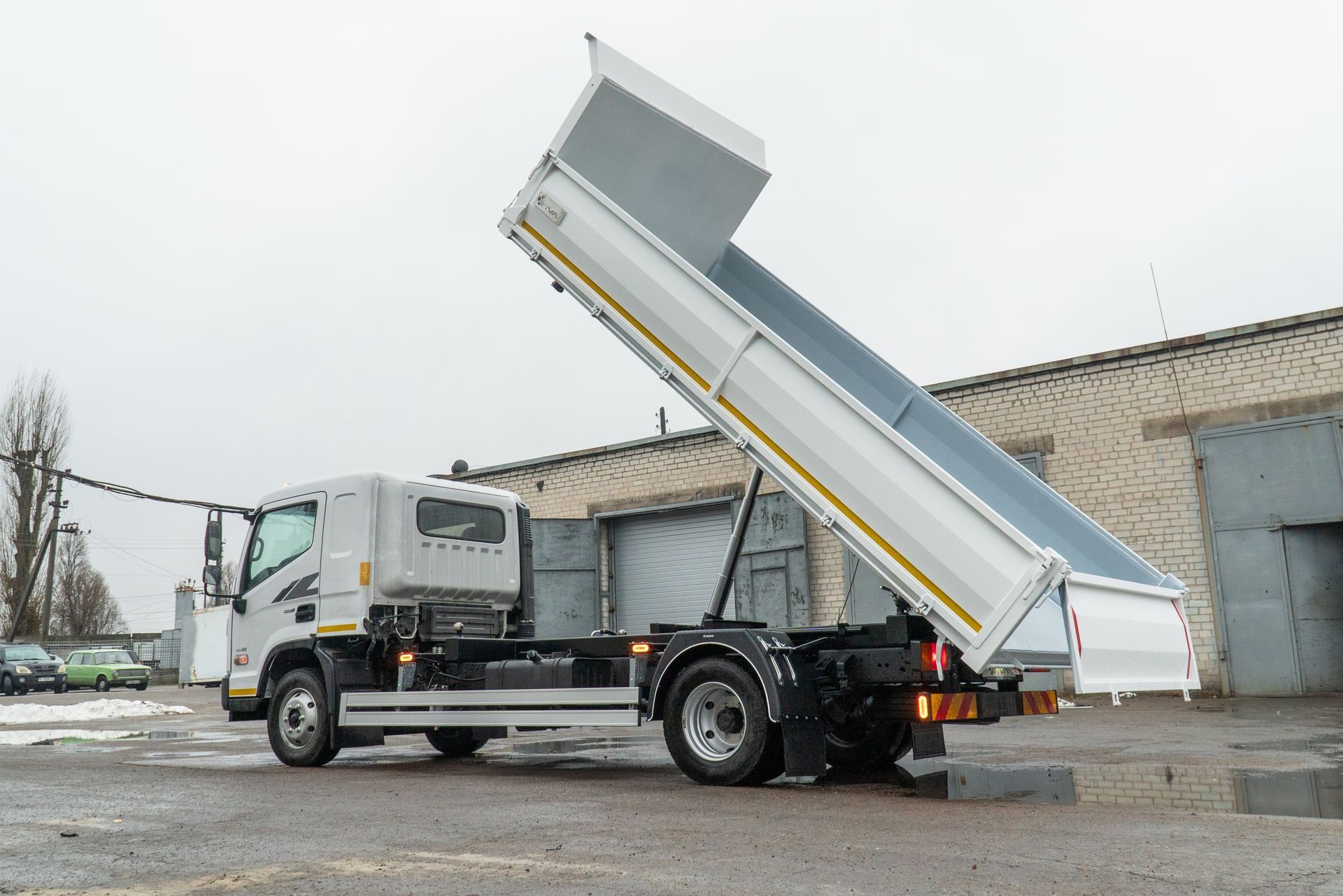
DownEaster builds with heavy-gauge steel plate and bolt-together subframes rather than complex welded unibody designs, which means that damaged components can be unbolted and replaced without cutting torches or structural welding. Hydraulic cylinders mount externally where they can be inspected visually and replaced with standard tools, and the control valves are located under the bed in a protected but accessible position. This design reduces downtime because a hydraulic line failure or a bent hinge can be repaired on-site with common parts rather than requiring the truck to be pulled from service and transported to a fabrication shop.
Once the dump body is in service, you'll notice that the tailgate latches engage cleanly without binding, the bed raises evenly without tilting to one side under unbalanced loads, and the hydraulic hoist operates smoothly in freezing temperatures because the fluid reservoir and lines are sized to handle cold-weather viscosity changes. The bed returns to the lowered position and locks securely without requiring manual adjustment of the hold-down chains.
DownEaster also manufactures slide-in dump inserts that convert standard pickup beds into dump trucks, stainless-steel dump bodies for corrosive materials like road salt and de-icing brine, and commercial-grade sander systems that mount to the dump body or operate as standalone units. The choice depends on whether you need permanent installation or seasonal flexibility.
Questions Before Starting Your Project
These questions address how DownEaster dump bodies and hooklift systems are built, installed, and maintained across different seasonal applications in North Hampton.
How does a Swap-Hogg hooklift system secure the container to the truck frame during transport?
The hooklift arms lift the container and pull it forward onto the frame rails, where automatic locking pins engage through mating holes in the container's subframe, preventing vertical or horizontal movement even on rough terrain or during sudden stops.
What allows a DownEaster dump body to operate in freezing temperatures without hydraulic failure?
The hydraulic system uses cold-weather fluid with a lower pour point, and the reservoir is insulated and mounted close to the engine to retain heat, while the hoist cylinder is fully retracted when not in use to protect the rod from ice buildup and corrosion.
How is the tailgate hinge designed to handle repeated impact from heavy loads being dumped?
The hinge uses a full-width piano-style design with continuous steel tubing rather than individual bolt-on hinges, distributing stress across the entire width of the gate and preventing localized metal fatigue that leads to cracking.
What determines whether you need a steel or stainless-steel dump body?
Steel bodies are lighter and less expensive for general hauling of stone, soil, and construction debris, while stainless-steel bodies resist corrosion from road salt, de-icing chemicals, and wet organic materials like manure or compost that cause standard steel to rust through within a few seasons.
How does a slide-in dump insert differ from a full dump body in terms of installation and payload capacity?
A slide-in insert uses the truck's existing bed and frame without modification, reducing installation time and cost, but it has lower payload capacity and slower dumping action compared to a chassis-mounted dump body with a dedicated hydraulic hoist system.
DownEaster products are built for contractors and municipalities operating in heavy-use environments where equipment needs to function reliably without frequent maintenance. Boyer's Truck Equipment installs dump bodies, hooklift systems, and sander units on work trucks throughout North Hampton and Hudson. Arrange an on-site consultation to review your hauling requirements and determine which system fits your operation.